Ultrasound therapy is a form of electrotherapy that uses high-frequency sound waves—typically above 1 MHz—that are inaudible to the human ear. These sound waves are delivered through a hand-held probe applied to the skin over the injured area. The therapy is commonly used in physiotherapy, sports medicine, and rehabilitation to support the healing of muscles, tendons, ligaments, and other soft tissues.
Unlike other therapies that only address surface pain, ultrasound therapy penetrates deep into tissues, stimulating repair processes at a cellular level. It can be used for both acute injuries and chronic conditions.
Common Uses
Muscle strains and ligament sprains
Tendon injuries such as tennis elbow or Achilles tendinopathy
Joint inflammation and bursitis
Post-surgical rehabilitation to restore function and flexibility
Breaking down scar tissue and adhesions in soft tissue injuries
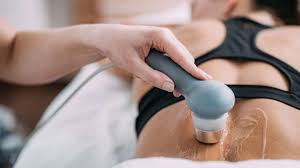
The sound waves create microscopic vibrations in the tissue, which help to break down scar tissue, reduce adhesions, and improve tissue elasticity.
Thermal Effects
Ultrasound generates gentle heat in deep tissues, which increases blood flow, relaxes muscles, and reduces stiffness.
The warmth also enhances the extensibility of tendons and ligaments, making rehabilitation exercises more effective.
Cellular Effects (Non-Thermal)
The mechanical energy stimulates cellular repair processes, including protein synthesis and collagen production.
Encourages tissue regeneration in muscles, tendons, and ligaments, supporting faster healing.
Pain Reduction
Ultrasound can modulate nerve activity in the treated area, reducing pain signals to the brain.
Helps relieve both acute injury pain and chronic discomfort from overuse or degeneration.
FAQ’s
Does it hurt?
Most clients feel a gentle warmth or slight vibration in the treated area. The therapy is generally comfortable and non-painful.
How long is a session?
Sessions usually last 5–20 minutes, depending on the size of the area being treated and the type of injury.
How many sessions will I need?
The number of sessions depends on the severity and type of injury. Some clients notice improvement after 1–2 sessions, while chronic injuries may require multiple sessions over several weeks.
Is ultrasound therapy safe?
Yes. When performed by a trained professional, ultrasound therapy is safe, non-invasive, and low-risk. Minor skin irritation or warmth may occur but usually resolves quickly.
Can it be combined with other treatments?
Yes. Ultrasound therapy is often used alongside physiotherapy, NMES, TENS, IFT, exercise, or sport taping to enhance recovery.
Who should avoid ultrasound therapy?
– People with pacemakers or implanted electrical devices
– Pregnant individuals (over the abdomen or lower back)
– Areas with active infections, tumors, or open wounds
When will I see results?
-Pain relief and improved flexibility can sometimes be felt immediately after a session.
-Tissue healing and functional improvements usually appear over multiple sessions, depending on the injury.