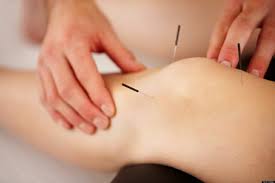
Dry needling is a treatment therapy that uses thin, threadlike needles to penetrate stiff or knotted muscles that are injured or causing pain.
The treatment focuses on musculoskeletal “trigger points,” which are tight bands in muscle tissue that may lead to pain. These trigger points may also be the source of a limited range of motion and loss of flexibility. Dry needling is used in addition to an exercise program to relieve muscular pain and stiffness while improving the abilities of those muscles to contract and relax.
To address these trigger points, we inserts thin, sterile needles – like those used in acupuncture – into the tight or sore muscle.
The needle penetrates the muscle tissue, potentially causing a local twitch response that can release tension and reduce pain.